The Question That Nobody Answers
The Sumerian King List records eight pre-flood rulers who governed five cities across a combined span of 241,200 years. Their names are recorded. Their cities are recorded. Their durations of rule are recorded. Multiple copies of the document preserve this information with notable consistency.
Not one of the eight has an identified burial site anywhere in Mesopotamia.
No tomb. No grave goods. No skeletal remains. No memorial inscription. No funerary monument. No archaeological trace of their physical existence beyond the document that records their names.
No burial has been securely identified with any of them, and no archaeological evidence presently links any known grave to their names.
What We Find for Everyone Else
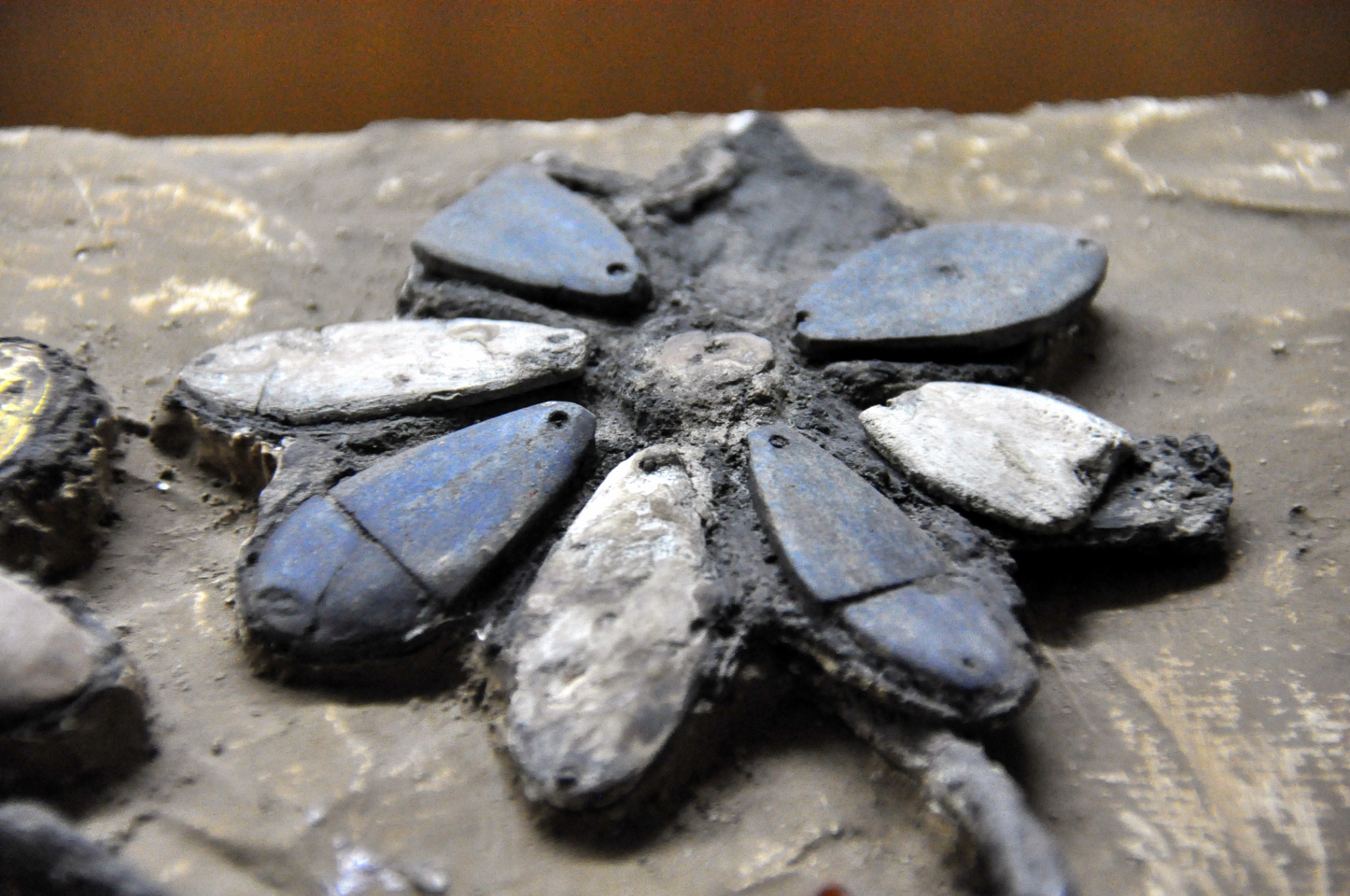
The archaeological record of ancient Mesopotamia is rich with burials. The dead were important. Burial practices were elaborate, varied, and well documented across every period of Mesopotamian history.
The Royal Cemetery at Ur — dating to approximately 2600–2500 BC, within the Early Dynastic period that the post-flood King List covers — is among the most spectacular archaeological discoveries of the twentieth century. Leonard Woolley's excavations in the 1920s and 1930s uncovered sixteen tombs designated as "royal" on the basis of their extraordinary contents and construction.
Queen Puabi was buried with a gold headdress of exceptional craftsmanship, lapis lazuli and carnelian jewelry, gold vessels, a gold cup, and musical instruments including a decorated lyre. Her tomb and the surrounding royal burials also contained numerous attendants, some of whom appear to have been sacrificed as part of the funerary ritual. The scale of the funerary investment — in wealth, craftsmanship, and human life — reflects a society that regarded the burial of its rulers as a matter of enormous importance.
Puabi's burial represents an enormous expenditure of wealth, labor, and human life. The gold alone came from distant trade networks. The lapis lazuli originated hundreds or thousands of kilometers away, likely from Afghanistan. The craftsmanship required specialized artisans working for extended periods. The attendant burials required the permanent loss of trained, productive members of the community.
This was not done casually. It was done because the society believed that its rulers needed provisions, companions, and status markers in the afterlife. The dead ruler continued to exist, and that continued existence required material support.
Other Early Dynastic burials at Ur and elsewhere — while less spectacular than the royal tombs — confirm that elaborate burial was standard practice for individuals of high status throughout southern Mesopotamia. Grave goods, burial structures, and funerary offerings appear consistently in the archaeological record from the Ubaid period onward.
Post-flood King List rulers with independently confirmed historical existence — such as Enmebaragesi of Kish, verified by inscriptions — belong to the same cultural tradition that produced these elaborate burials. They lived in a society that buried its dead with care, expense, and purpose.
What We Do Not Find
The pre-flood rulers have none of this.
Several of the five cities named in the pre-flood King List have been securely identified archaeologically, while others remain uncertain or only tentatively located. Eridu in particular has been extensively excavated, with occupation layers reaching back to approximately 5400 BC. The deepest levels contain the remains of small temple structures, pottery, and other artifacts.
What they do not contain is burials of rulers matching the individuals named in the King List.
This absence could be explained in several ways, and intellectual honesty requires that each be considered.
Excavation gaps. Not every site has been fully excavated. Larak has not been securely located (see the Larak page). Bad-tibira has received limited attention (see the Bad-tibira page). It is possible — perhaps even probable — that significant archaeological material remains undiscovered at these sites. The absence of evidence is not necessarily evidence of absence.
Destruction and erosion. Mesopotamian sites have endured millennia of weathering, flooding, rebuilding, and — in modern times — looting and conflict. Burials that once existed could have been destroyed by subsequent construction, river action, or the flood deposits that separate earlier and later occupation layers at several sites.
Different burial practices. The pre-flood rulers may have been buried in ways that leave no archaeological trace — cremation, exposure, river burial, or other practices not attested in later Mesopotamian tradition but possible for an earlier culture with different beliefs.
Each of these explanations is plausible. None can be ruled out. And together, they may account for the absence.
But they share a common feature: they are explanations for why evidence we would expect to find is not there. They are gap-fillers — reasonable, defensible, and entirely speculative.
The Contrast
The contrast between the pre-flood and post-flood archaeological records is the observation that matters.
Post-flood Mesopotamia gives us abundant physical evidence of elite and royal burial. Cemeteries, rich graves, monumental tombs, grave goods, inscriptions, and historically attested rulers all become part of the archaeological record. The Royal Cemetery at Ur alone demonstrates that Mesopotamian society invested extraordinary resources in burying its leaders. This was a civilization that cared deeply about where its rulers were laid to rest.
For the eight pre-flood rulers, no burial has ever been securely identified.
The textual record names them. The archaeological record has not found them. That asymmetry is the observation.
What the Absence Might Mean
Scholars generally regard the pre-flood rulers as legendary or mythological for reasons that extend far beyond the absence of tombs: their extraordinary reign lengths, the literary character of the tradition, and the presence of figures associated with mythology. In that framework, the lack of identifiable burials is unsurprising. Legendary figures do not leave graves.
That interpretation does not make the archaeological absence meaningless. It simply explains it one way.
There is another reading of the absence — one that the document itself does not contradict.
The King List records rulers taking office, reigning for stated durations, and being succeeded. It does not describe the deaths or burials of the eight pre-flood kings. The text does not say any of them died at their post. It records governance and transfer, not biology and mortality.
If those rulers were temporary occupants rather than permanent residents — if they were, in whatever sense, present for a term and then departed — then the absence of tombs is not a gap in the archaeological record. It is the expected result. You do not find the burial of someone who did not die there.
The Observation
This page does not claim to know why the pre-flood tombs are missing. It observes that they are missing, and it notes that the absence is consistent with more than one explanation.
The conventional explanation — that the rulers were mythological and therefore never existed to be buried — is one possibility.
The alternative — that the rulers were present but impermanent, and left when their terms ended — is another possibility. The text records terms of rule and succession. It does not record their deaths.
Eight rulers. Five cities. 241,200 years.
Mesopotamia has yielded thousands of burials, including elaborate graves belonging to its elite and rulers.
Not one burial has been securely identified with any of the eight kings before the flood.
Where are they buried?
Sources & further reading
Sources: Leonard Woolley, Ur Excavations II: The Royal Cemetery (1934); Richard L. Zettler and Lee Horne, eds., Treasures from the Royal Tombs of Ur (1998); Harriet Crawford, Sumer and the Sumerians (2004); Electronic Text Corpus of Sumerian Literature (ETCSL), The Sumerian King List, t.2.1.1.